

To relieve a pinched nerve, most people do best with gentle movement, a short break from whatever position sets it off, ice or heat, and small posture changes, giving the irritated nerve room to settle. I'm Dr. Ivan Bracic, and I've treated spine and nerve pain in Southwest Florida for years at Novaré Injury Care and Rehab in Fort Myers and Lehigh Acres. For nerve pain driven by a disc, our non-surgical spinal decompression takes pressure off the nerve without surgery.
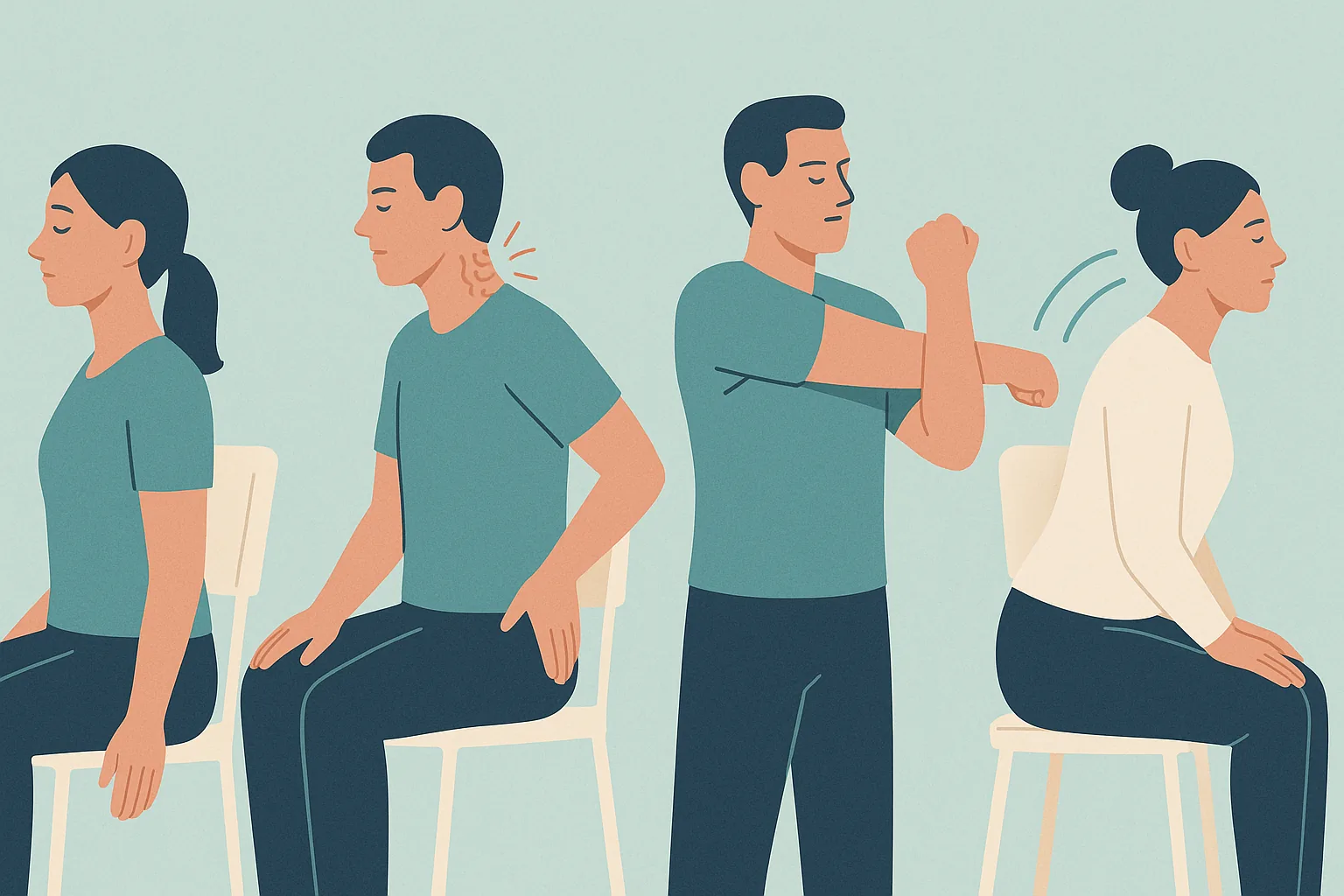
Here's the honest version. A pinched nerve is uncomfortable, sometimes alarming, and for many people it eases with patient, sensible care at home. This article is the treatment side of the story: what actually helps, in what order, and when it's time to stop self-managing and get seen. If you want the causes and warning signs, I cover those separately in my guide to a pinched nerve in the lower back.
What actually helps a pinched nerve calm down
Gentle movement, a short rest from the aggravating position, and ice or heat are the everyday tools that help most pinched nerves settle. None of it is dramatic, and that's the point. You're giving an irritated nerve the space and time it needs.
The instinct after a sharp jolt of nerve pain is to freeze and protect the area. A day or two of easing off the painful activity is reasonable. Beyond that, staying too still usually backfires. For most people, comfortable motion beats prolonged rest.
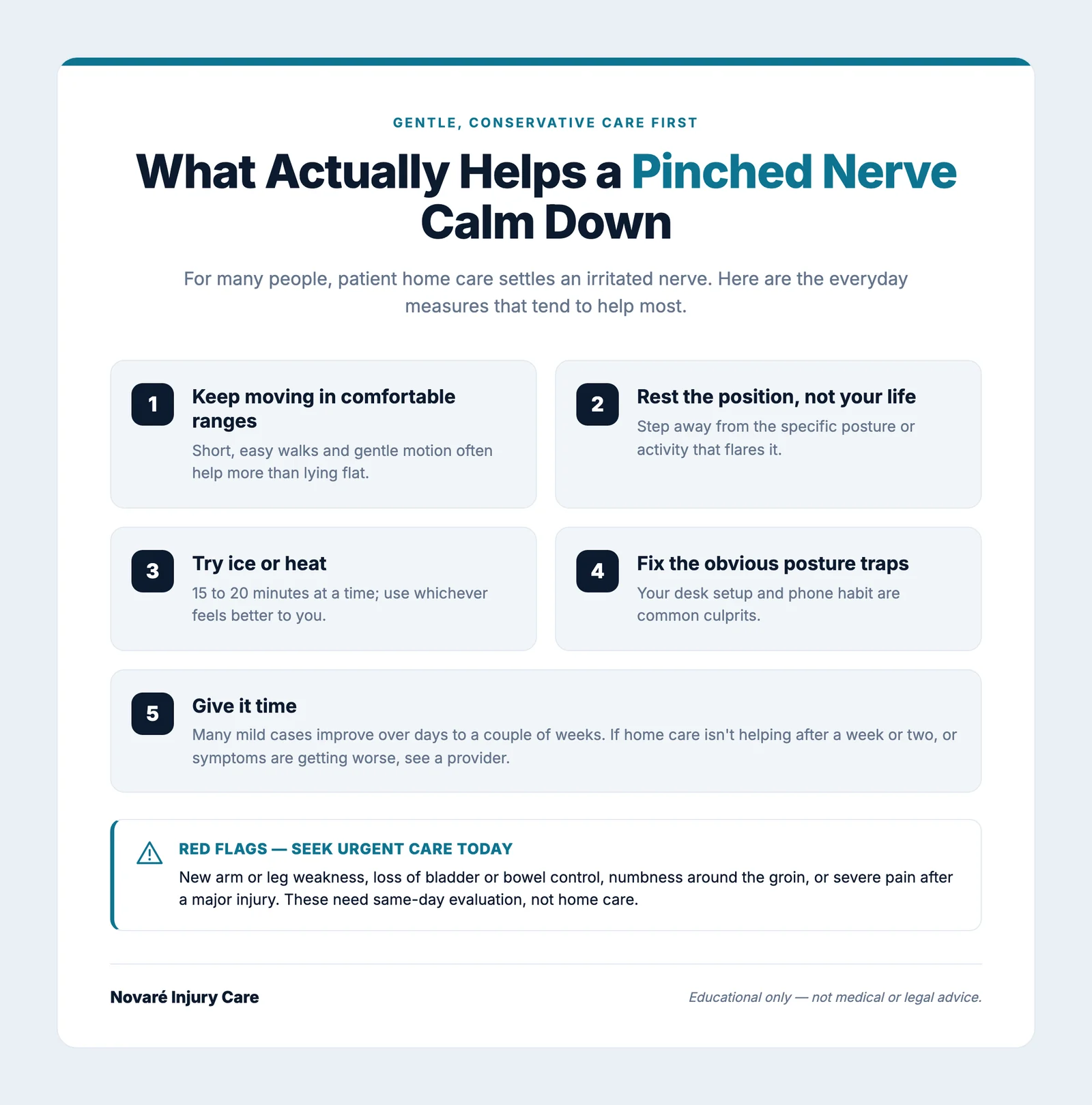
Here's the general approach I walk patients through, keeping in mind that everyone's body is a little different:
- Keep moving in comfortable ranges. Short, easy walks and gentle motion often help more than lying flat.
- Rest the aggravating position, not your whole life. Step away from the specific posture or activity that flares it.
- Try ice or heat. Fifteen to twenty minutes at a time; use whichever feels better to you.
- Fix the obvious posture traps. Your desk setup and your phone habit are common culprits.
- Give it time. Many mild cases improve over days to a couple of weeks.
Gentle movement usually beats lying still
For many people, staying gently active helps a pinched nerve recover faster than strict rest. The old advice to lie flat for a week has mostly fallen out of favor for common back and neck pain.
Major clinical guidelines, including guidance summarized by the American Academy of Family Physicians, generally favor staying active over extended bed rest for low back pain. That fits what I see in the clinic every week.
So keep the blood moving. Take slow walks, change positions often, and move through ranges that don't spike your symptoms. If a movement sends a sharp electric jolt down an arm or leg, back off that one. Comfortable is the guide, not heroic.
Ice, heat, and simple posture changes
Ice, heat, and better posture won't cure a nerve on their own, but they can take the edge off while your body does the healing. Think of them as support, not a fix.
Ice tends to help in the first day or two and after activity that aggravates things, since it can quiet inflammation. Heat often feels better for muscle guarding and stiffness that builds up around an irritated nerve. There's no universal winner here. Use what genuinely feels better on you, 15 to 20 minutes at a stretch, with a layer between the pack and your skin.
Posture is the quiet one people overlook. A nerve pinched in the neck often flares from hours of looking down at a phone or hunching toward a monitor. A nerve pinched in the lower back can be aggravated by slumped sitting. Small changes help: raise your screen to eye level, sit back into your chair with support, and get up to move every 30 to 45 minutes.
Movement and stretches to try gently
Easy, pain-respecting movement can help create space around a compressed nerve for many people. The rule is simple: gentle, slow, and never into sharp pain.
I won't prescribe a specific routine here, because the right movements depend on what's actually pinched and where. What I can say is that for neck-related nerve pain, slow, small neck rotations and gentle shoulder rolls are often tolerated well. For lower-back nerve pain, easy position changes and short walks tend to help more than aggressive stretching.
If any movement makes the numbness, tingling, or shooting pain worse or push it further down the limb, stop that one. That "peripheralizing" pattern, where symptoms travel farther from the spine, is a signal to ease off and get guidance rather than to keep stretching through it.
What to avoid while a pinched nerve heals
Avoid the two extremes: pushing through sharp pain, and shutting down completely for days on end. Both tend to slow recovery for most people.
A few specifics I flag for patients:
- Don't power through the exact activity that flares it. Repeatedly poking the nerve keeps it irritated.
- Don't crank on aggressive stretches or have someone yank the joint. More force is not more relief here.
- Don't ignore worsening numbness or weakness. That's information, not something to tough out.
- Don't stay in bed for days. Prolonged rest stiffens the whole area for most people.
Over-the-counter pain relievers help some people take the edge off enough to keep moving. Use them as directed, and talk to a pharmacist or provider if you take other medications or have health conditions that make them risky. That's a real conversation, not a throwaway line.
When to see a provider, and the red flags that can't wait
See a provider when a pinched nerve is severe, spreading, not improving after a week or two, or keeps coming back. Some symptoms, though, mean skip the wait-and-see and get urgent care today.
Treat these as red flags that need same-day evaluation, not home care: new or worsening weakness in an arm or leg, loss of bladder or bowel control, numbness around the groin or inner thighs, or significant nerve pain right after a major injury like a fall or a crash. Those patterns can point to something that needs prompt attention, so don't sit on them.
Short of that, the reasonable trigger to get evaluated is simple. If conservative care isn't moving the needle after one to two weeks, if the pain is disrupting sleep and work, or if it's a repeat visitor, a proper exam beats another week of guessing. Getting the diagnosis right is what makes treatment actually work.
How we treat a stubborn pinched nerve at Novaré
When home care isn't enough, our job is to find what's compressing the nerve and take the pressure off it, ideally without surgery. That starts with a real exam and, when it's warranted, diagnostic imaging so we're treating the actual cause rather than guessing.
From there, care is matched to what we find. Hands-on chiropractic and manual therapy can help restore movement and calm the surrounding muscles. When the nerve pain is driven by a bulging or herniated disc, non-surgical spinal decompression gently unloads the spine to create space around the nerve, which can bring relief for many people over a course of care. If the pain is more of a sciatica pattern running down the leg, we tailor the plan to that.
I've spent more than 30 years caring for spine and nerve problems, and my honest read is this: most people don't need surgery or injections as a first step. A careful diagnosis and a patient, conservative plan resolve a lot of pinched nerves. We reach for more aggressive options only when the conservative path has had a fair chance and the situation calls for it.
The questions I hear most from patients dealing with a pinched nerve, answered plainly.
Take pressure off that nerve, without jumping to surgery
You don't have to just wait out a pinched nerve, and you don't have to start with the most invasive option either. If yours is severe, spreading, or simply not letting up, our team at Novaré Injury Care and Rehab in Fort Myers and Lehigh Acres can help you figure out what's going on and take pressure off the nerve. Explore non-surgical spinal decompression or call our Fort Myers office at (239) 893-2225 to get evaluated.
This article was written and reviewed by Dr. Ivan Bracic, DC, founder and clinical director of Novaré Injury Care and Rehab in Fort Myers and Lehigh Acres, Florida. A Certified Independent Chiropractic Examiner and Trauma Team certified, Dr. Bracic has spent more than 30 years diagnosing and treating spine and nerve problems, including disc-related pinched nerves.
Frequently asked questions
How can I relieve a pinched nerve at home?
For many people, a pinched nerve calms down with gentle movement, a short break from the position that aggravates it, and ice or heat applied for 15 to 20 minutes at a time. Keep moving in comfortable ranges rather than lying flat for days, watch your posture at your desk and phone, and give it time. If home care isn't helping after a week or two, or symptoms are getting worse, see a provider.
How long does a pinched nerve take to heal?
There's no single timeline, and I won't promise one. Many mild pinched nerves ease over a few days to a few weeks with conservative care, while nerve irritation from a disc problem can take longer. What matters more than a calendar is the direction of travel. Improving week over week is a good sign. Getting worse, spreading, or bringing new weakness means it's time to be evaluated.
Should I rest or keep moving with a pinched nerve?
Mostly keep moving, within comfort. Short rest from a painful activity is reasonable in the first day or two, but prolonged bed rest tends to stiffen things and slow recovery for many people. Gentle walking, easy range-of-motion, and avoiding the specific position that flares your symptoms usually beat lying still. If moving at all is impossible or pain is severe, that's a reason to be seen rather than to push through.
When should I see a doctor for a pinched nerve?
See a provider if the pain is severe, if numbness or weakness is spreading, if it isn't improving after one to two weeks of conservative care, or if it keeps coming back. Seek urgent care right away for red flags: new leg or arm weakness, loss of bladder or bowel control, numbness around the groin, or pain following a significant injury. Those need same-day evaluation, not home care.
What does Novaré do for a pinched nerve?
We start by figuring out what's compressing the nerve, using an exam and, when it's warranted, diagnostic imaging. From there, care may include chiropractic and manual therapy, targeted movement, and for nerve pain driven by a disc, non-surgical spinal decompression. The goal is to take pressure off the nerve and help you move comfortably again, without jumping straight to injections or surgery.