
Back pain that shows up days after a crash is normal, and there are three main reasons for it: adrenaline masks pain at the scene, inflammation from the injury builds and peaks over the next 24 to 72 hours, and soft-tissue or disc damage surfaces slowly rather than all at once. Feeling fine right after a wreck does not mean you were not hurt. If you were in a crash in Southwest Florida, our team provides same-day auto accident care in Fort Myers and Lehigh Acres and documents the connection between your symptoms and the accident.
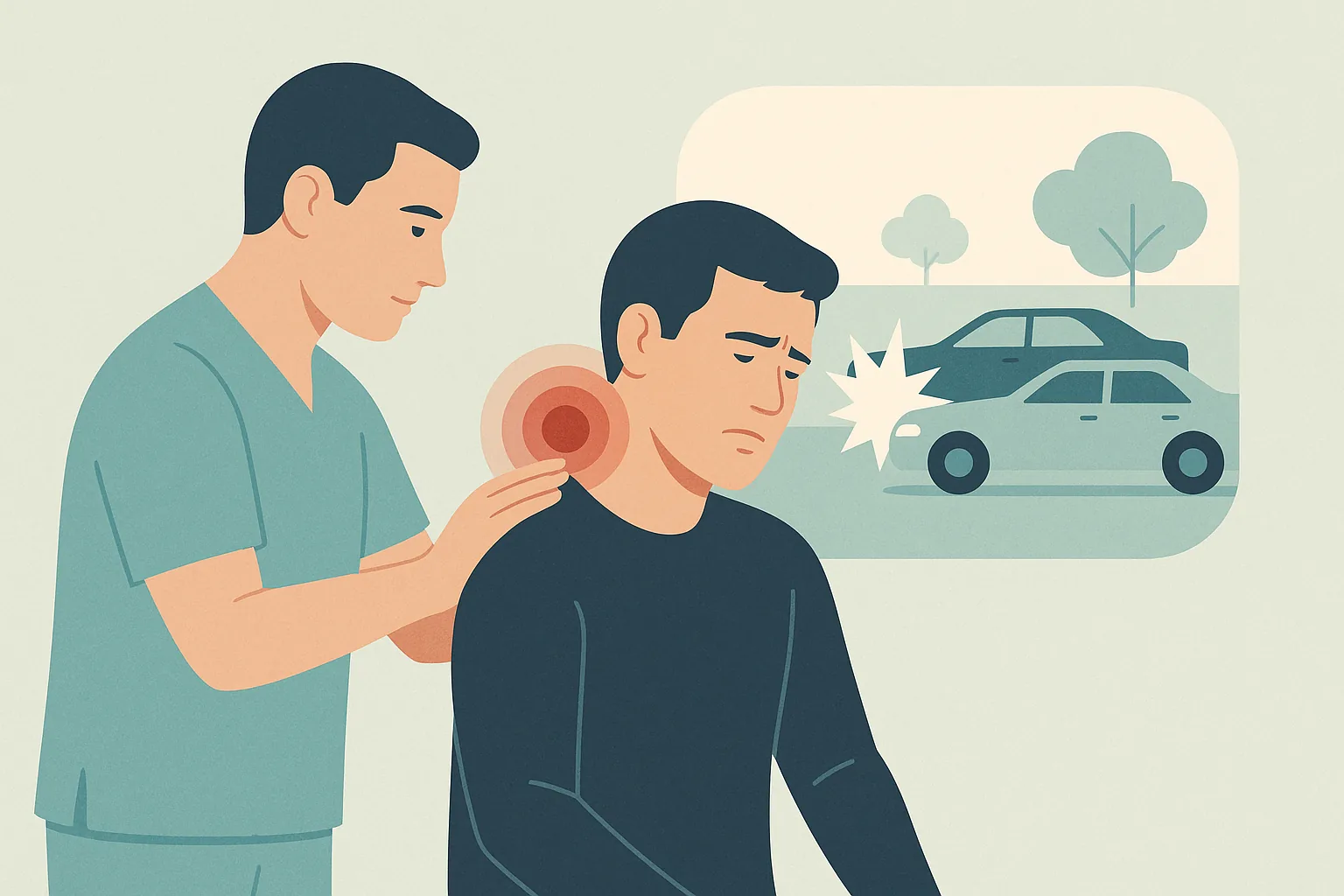
I'm Dr. Ivan Bracic, and I've spent more than 30 years treating injury patients, a lot of them here in Fort Myers and Lehigh Acres. The call I get most often is not from the scene of the crash. It's two or three days later, from someone who walked away feeling fine and woke up unable to turn their head or bend over. They almost always ask the same thing: why now? Here is exactly what is happening in your body, and why waiting to get checked is the part that costs people.
Why back pain shows up days after a crash
Back pain shows up late because your body suppresses it at first, then the injury inflames and swells over the following days. The delay is your nervous system and your tissue working on two different clocks. Adrenaline hides the pain in the moment; the actual damage takes a day or more to fully declare itself.
This pattern is well documented for the neck and back after motor vehicle collisions. The Cleveland Clinic notes that whiplash symptoms can take 24 hours or longer to appear, which is why a clear scene does not equal a clear body. Below are the three reasons behind that gap, in the order they unfold. That delay is exactly why the first days after a car accident should include an evaluation even when nothing hurts yet.
1. Adrenaline masks the pain at the scene
The first reason is chemical. A collision triggers your fight-or-flight response, flooding your system with adrenaline and cortisol. These stress hormones sharpen your focus and blunt pain so you can deal with the emergency in front of you.
That is genuinely useful in the moment. It's also why people trade insurance information, talk to the officer, and drive home feeling shaken but not hurt. The pain signals are there; your body is just turning down the volume.
When the adrenaline wears off, usually within a few hours to a day, the volume comes back up. The stiffness and ache you did not notice at the scene are suddenly loud. Nothing new happened to your back overnight. You are simply feeling an injury that was masked until the chemistry settled.
2. Inflammation builds over the first 24 to 72 hours
The second reason is timing. When muscles, ligaments, or discs get strained or torn, your body responds with inflammation, and that response is not instant. It builds, then peaks.
For most soft-tissue injuries, swelling and stiffness climb over the first day or two and are often at their worst somewhere between 24 and 72 hours after the injury. So the crash happens Friday afternoon, you feel manageable Saturday, and by Sunday or Monday you can barely move. That is inflammation doing exactly what it does, on its own schedule.
Here is the trap. Because the pain arrives late, people assume it means the injury is minor, or unrelated to the crash entirely. Neither is true. A delayed onset tells you how your body handled the injury, not how serious it is. Some of the disc and ligament injuries I treat announce themselves the slowest.
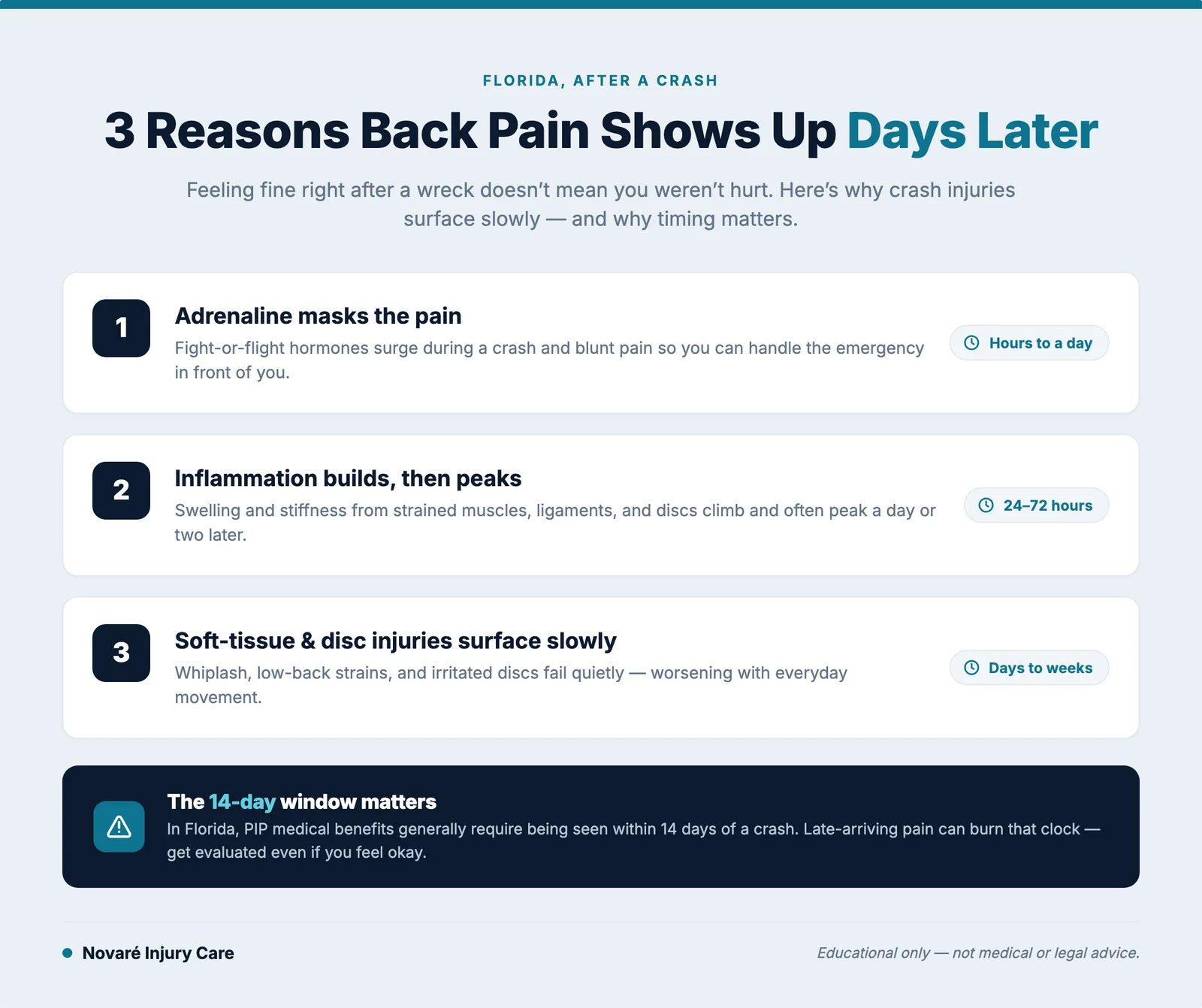
3. Soft-tissue and disc injuries surface slowly
The third reason is the nature of the injuries themselves. Even a low-speed rear-end crash whips your head and spine through forces your body never planned for. That force lands on soft tissue and discs, and those structures rarely fail dramatically. They fail quietly.
The common late-arriving injuries fall into a few groups:
- Whiplash, where the sudden back-and-forth motion overstretches the muscles and ligaments of the neck, often stiffening over the next day or two.
- Low-back muscle and ligament strains, which tighten and spasm as inflammation sets in rather than at the moment of impact.
- Disc injuries, where a bulging or irritated disc in the neck or low back can press on nerves and produce pain, tingling, or numbness that spreads down an arm or leg days later.
Unlike a broken bone, these injuries don't have an obvious break point. They swell, refer pain to nearby areas, and worsen with everyday movement, so the full picture can take days to a couple of weeks to form. That slow reveal is precisely why a "wait and see" approach backfires. By the time it clearly hurts, the injury has usually had days to settle in.
Why the delay makes the 14-day window matter
In Florida, the delay between the crash and the pain runs straight into a deadline most people don't know about. To keep your Personal Injury Protection (PIP) medical benefits, Florida law generally requires that you're seen by a qualified provider within 14 days of the accident.
Think about how easily those two clocks collide. Your pain might not start until day three or four. If you then decide to give it a week to see if it settles, you can burn through the window and lose access to PIP medical benefits, even though your injury is real and clearly from the crash. I've written a fuller breakdown of that clock in 7 things to do after a car accident in Florida, and it's worth the read.
Getting evaluated early does two things at once. It catches the injury while treatment is most straightforward, and it creates a medical record connecting your symptoms to the accident from the start. A gap between the crash and your first visit is one of the first things an insurer looks at, so an early visit protects both your recovery and your coverage.
What to do when the pain shows up
If soreness, stiffness, headache, or nerve symptoms surface in the days after a crash, don't talk yourself out of it. Get evaluated, and tell the provider clearly that it started after your accident. Bring your crash report number and insurance details so the connection is documented from visit one.
At Novaré Injury Care & Rehab, an early evaluation usually starts with an exam and, when it's warranted, first-visit diagnostic imaging to see what's actually injured instead of guessing. From there, care might involve chiropractic and manual therapy, targeted whiplash treatment, or spinal decompression for disc injuries, depending on what the exam finds.
None of that requires you to be certain something is wrong. That is the point of an evaluation. If it turns out to be a simple strain, you'll know, and you'll have your window protected. If it's more, you'll have caught it early.
A note on scope: this article explains what generally happens after a Florida crash. It is educational, not medical or legal advice. For your specific injuries and your specific policy, rely on a qualified provider and a licensed attorney.
The questions I hear most from patients whose pain arrived a few days after their crash, answered plainly.
Sore after a crash? Get evaluated before the window closes
You don't have to be sure you're hurt to get checked, and you shouldn't let the 14-day clock run out while you wait to see how you feel. If back or neck pain has shown up in the days after a crash in Southwest Florida, our auto accident care team in Fort Myers and Lehigh Acres offers same-day and next-day appointments, in-house imaging, and the documentation your PIP claim needs. Call our Fort Myers office at (239) 893-2225 to get seen quickly.
This article was reviewed by Dr. Ivan Bracic, DC, founder and clinical director of Novaré Injury Care and Rehab in Fort Myers and Lehigh Acres, Florida. Trauma Team certified and a Certified Independent Chiropractic Examiner, Dr. Bracic has spent more than 30 years caring for injury patients and documenting crash-related cases.
Frequently asked questions
Why does back pain start days after a car accident?
Because your body hides the injury at first. Adrenaline and cortisol surge during a crash and blunt pain for hours or even a day or two. As those stress hormones drop, the inflammation from strained muscles, ligaments, and discs builds and peaks, usually between 24 and 72 hours later. That is when the ache, stiffness, and sharp movements you did not feel at the scene finally show up.
How long after a car accident can injuries appear?
Symptoms often begin within a day or two, and soft-tissue and disc injuries can keep developing over the following days to weeks. Whiplash, low-back strains, and disc irritation are the common late-arriving ones. Because injuries can surface slowly, Florida generally gives you 14 days from the crash to be seen for PIP medical benefits, so it is best to get evaluated even if you feel okay at first.
Is delayed back pain after a crash serious?
It can be. Delayed pain does not mean the injury is minor, only that the symptoms took time to surface. Soft-tissue tears and disc problems frequently announce themselves late, and left unchecked they can settle into chronic pain. A prompt evaluation sorts out what is a simple strain from what needs imaging and active treatment, which is why getting checked early matters.
Should I see a doctor if my back only hurts a little after an accident?
Yes. Mild soreness after a crash can be the early edge of a soft-tissue or disc injury that worsens over the next several days. An evaluation catches hidden injuries before they progress and creates a medical record linking your symptoms to the accident. That record also protects your PIP eligibility, which in Florida generally depends on being seen within 14 days of the crash.
Can I still get treatment if I waited a few days to feel pain?
Usually yes, as long as you act within Florida's 14-day window for PIP medical benefits. Delayed symptoms are exactly why that window exists. Get evaluated as soon as the pain shows up, tell the provider it started after your accident, and bring your crash and insurance details so the connection to the crash is documented from your first visit.