
If you're asking how long whiplash lasts, the honest answer is that for many people it improves within a few weeks to a few months, though a smaller share deal with symptoms that linger longer. I'm Dr. Ivan Bracic, and I've spent more than 30 years treating neck injuries after car accidents here in Southwest Florida. Recovery timelines vary, so this walks through what's realistic and what changes it. If you're hurting after a crash, our team provides whiplash treatment in Fort Myers and Lehigh Acres with a plan built around your actual injury.
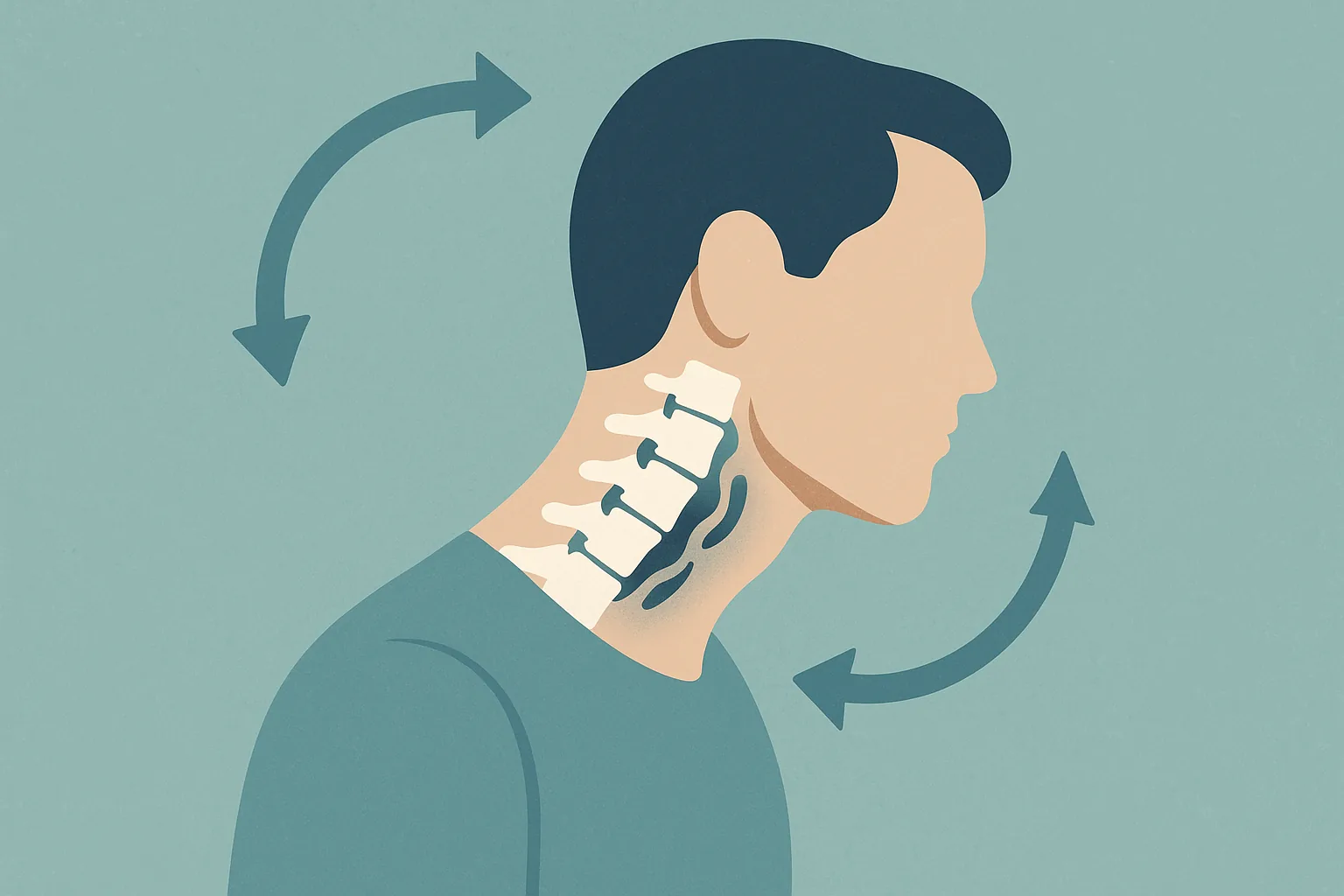
Whiplash is one of the most common injuries I see, and it's also one of the most misunderstood. People expect it to clear up in a few days, then worry when it doesn't. Others feel fine at the scene and are surprised when their neck locks up two days later. Knowing the general shape of recovery makes the whole process less frightening, so let's look at the timeline.
How long does whiplash last for most people
For most people, whiplash improves within a few weeks to a few months, with milder cases often settling in two to four weeks. According to the National Institute of Neurological Disorders and Stroke, most people with neck strain from this kind of injury recover fully, though recovery can take time. Use that range as a guide, not a promise, because your body and your injury are your own.
I'll say the part patients most want to hear, carefully. Generally, the majority of whiplash cases resolve with time and appropriate care. A minority don't follow that curve, and those are the cases worth watching closely from the start.
A realistic whiplash recovery timeline
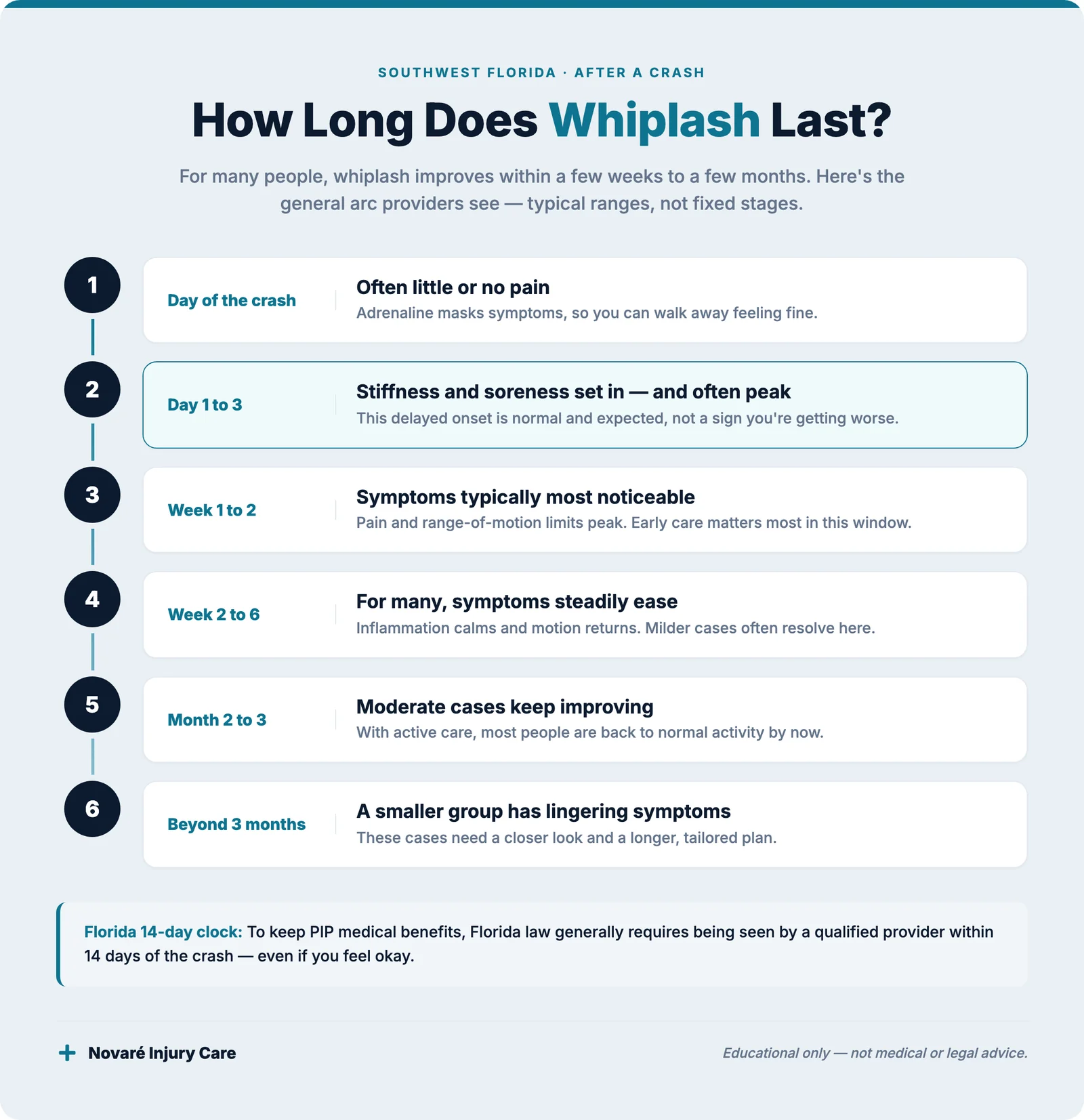
Here's the general arc I see in the clinic. These are typical ranges, not fixed stages, and your path may look different.
- Day of the crash: Often little or no pain. Adrenaline masks symptoms, which is why you can walk away feeling fine.
- Day 1 to 3: Stiffness, soreness, and headaches usually set in and often peak. This delayed onset is normal and expected.
- Week 1 to 2: Pain and range-of-motion limits are typically at their most noticeable. Early care matters most in this window.
- Week 2 to 6: For many, symptoms steadily ease as inflammation calms and motion returns. Milder cases often resolve here.
- Month 2 to 3: Moderate cases continue improving with active care. Most people are back to normal activity by now.
- Beyond 3 months: A smaller group has lingering symptoms that need a closer look and a longer plan.
The pattern that surprises people most is that early worsening. Feeling worse on day two than day zero does not mean you're getting worse in a dangerous way. It usually means the adrenaline has worn off and the injury is showing its true colors.
Why some whiplash becomes chronic
A portion of people develop symptoms that last many months, which providers call chronic whiplash-associated disorder. Research published in the journal Pain has found that a meaningful share of people report ongoing neck pain a year after injury. Understanding the risk factors helps you and your provider act early rather than wait.
Several things are generally linked to a slower recovery. None of them are your fault, and none of them guarantee a bad outcome. They simply tell me to watch a case more closely.
- High pain and stiffness right away. Severe initial symptoms often signal a more significant injury.
- Early nerve-type symptoms. Numbness, tingling, or pain radiating into the arms deserves prompt attention.
- Older age or prior neck problems. Existing wear or past injuries can slow healing.
- A long delay before starting care. Waiting tends to make the road longer, not shorter.
This is different from the question of whether you have whiplash at all. If you're still sorting out your symptoms, our companion guide on the signs and symptoms of whiplash walks through what to watch for in the first days after a crash.
What affects how fast you recover
Two people in the same fender bender can have very different recoveries, and that throws people off. Injury severity is the biggest driver, but it isn't the only one. Your age, general health, and any prior neck issues all play a part.
How you approach recovery matters too. For years the instinct was to rest, brace the neck, and wait. Current guidance generally points the other way. Staying gently active and restoring motion, under a provider's direction, tends to be associated with better outcomes than prolonged rest or a stiff collar.
Timing is the factor most in your control. Starting appropriate care early, while the injury is fresh, gives you the best runway. In Florida there's a second reason not to wait, which brings us to the clock most crash patients don't know is running.
When to seek care, and the Florida 14-day clock
See a qualified provider promptly, even if you think you feel okay. Because adrenaline masks whiplash for hours or days, an early evaluation catches injuries before they settle in and creates a clear record tying your symptoms to the crash. That record protects both your recovery and your claim.
If you're in Florida, prompt care isn't just clinically smart. To be eligible for Personal Injury Protection (PIP) medical benefits, Florida law generally requires you to be seen by a qualified provider within 14 days of the accident. Miss that window and you can lose access to those benefits even when your injuries are real. Our broader checklist on what to do after a car accident in Florida covers that rule in full.
Some symptoms mean you should seek care right away, not just soon. Get evaluated urgently if you have numbness or weakness in your arms, trouble with balance or speech, or severe, worsening headaches. When ongoing treatment is warranted, that's where whiplash treatment and, for disc-related injuries, spinal decompression come in.
A note on scope: this article explains what generally happens with whiplash recovery. It is educational, not medical or legal advice. For your specific injury and your specific policy, rely on a qualified provider and a licensed attorney.
The questions I hear most from patients recovering from whiplash, answered plainly.
Still hurting after your crash? Let's build a plan
You don't have to guess whether your neck pain is "normal" or wait to see if it fades on its own. If you were in a car accident in Southwest Florida, our whiplash care team in Fort Myers and Lehigh Acres offers prompt appointments, in-house imaging, and a recovery plan built around your specific injury. Call our Fort Myers office at (239) 893-2225 to get evaluated and protect both your recovery and your coverage.
This article was reviewed by Dr. Ivan Bracic, DC, founder and clinical director of Novaré Injury Care and Rehab in Fort Myers and Lehigh Acres, Florida. Trauma Team certified and a Certified Independent Chiropractic Examiner, Dr. Bracic has spent more than 30 years caring for injury patients and documenting crash-related cases.
Frequently asked questions
How long does whiplash usually last?
For many people, whiplash improves within a few weeks to a few months. Generally, milder cases settle in two to four weeks, while moderate cases can take several months of care. A smaller share of people develop longer-lasting symptoms, sometimes called chronic whiplash or whiplash-associated disorder. Recovery time depends on how severe the injury is, your age and overall health, and how soon you start appropriate care after the crash.
Is it normal for whiplash to get worse before it gets better?
Yes, it is common. Adrenaline can mask pain right after a collision, so stiffness and soreness often peak a day or two later as the initial rush wears off and inflammation sets in. That delayed worsening does not mean something is seriously wrong, but it is a reason to be evaluated promptly rather than waiting to see if it passes. If pain sharply increases or you notice numbness, weakness, or severe headaches, seek care right away.
Can whiplash become permanent?
Most people recover, but a portion develop persistent symptoms that can last many months or longer, which providers call chronic whiplash-associated disorder. Factors linked to slower recovery include higher initial pain, severe stiffness, early nerve-type symptoms, and older age. Starting appropriate care early and staying gently active, rather than resting too long, is generally associated with better outcomes. Nothing here is a guarantee, and your provider can assess your specific case.
How do I know if my neck pain is whiplash or something more serious?
You often cannot tell on your own, which is why a prompt evaluation matters. Whiplash is a soft-tissue and joint injury of the neck, but a crash can also cause disc injuries, nerve involvement, or, rarely, fractures. Warning signs that need immediate attention include numbness or tingling down the arms, weakness, trouble with balance or speech, or severe, worsening headaches. A qualified provider can examine you and order imaging when it's warranted.
Does treatment actually speed up whiplash recovery?
Appropriate care can support a smoother recovery, though no treatment guarantees a set timeline. Current guidance generally favors staying gently active, restoring range of motion, and targeted manual therapy over prolonged rest or a stiff collar. Early evaluation also catches hidden injuries and, in Florida, protects your PIP eligibility within the 14-day window. The right plan depends on your exam findings, so it should be tailored to your specific injury.