
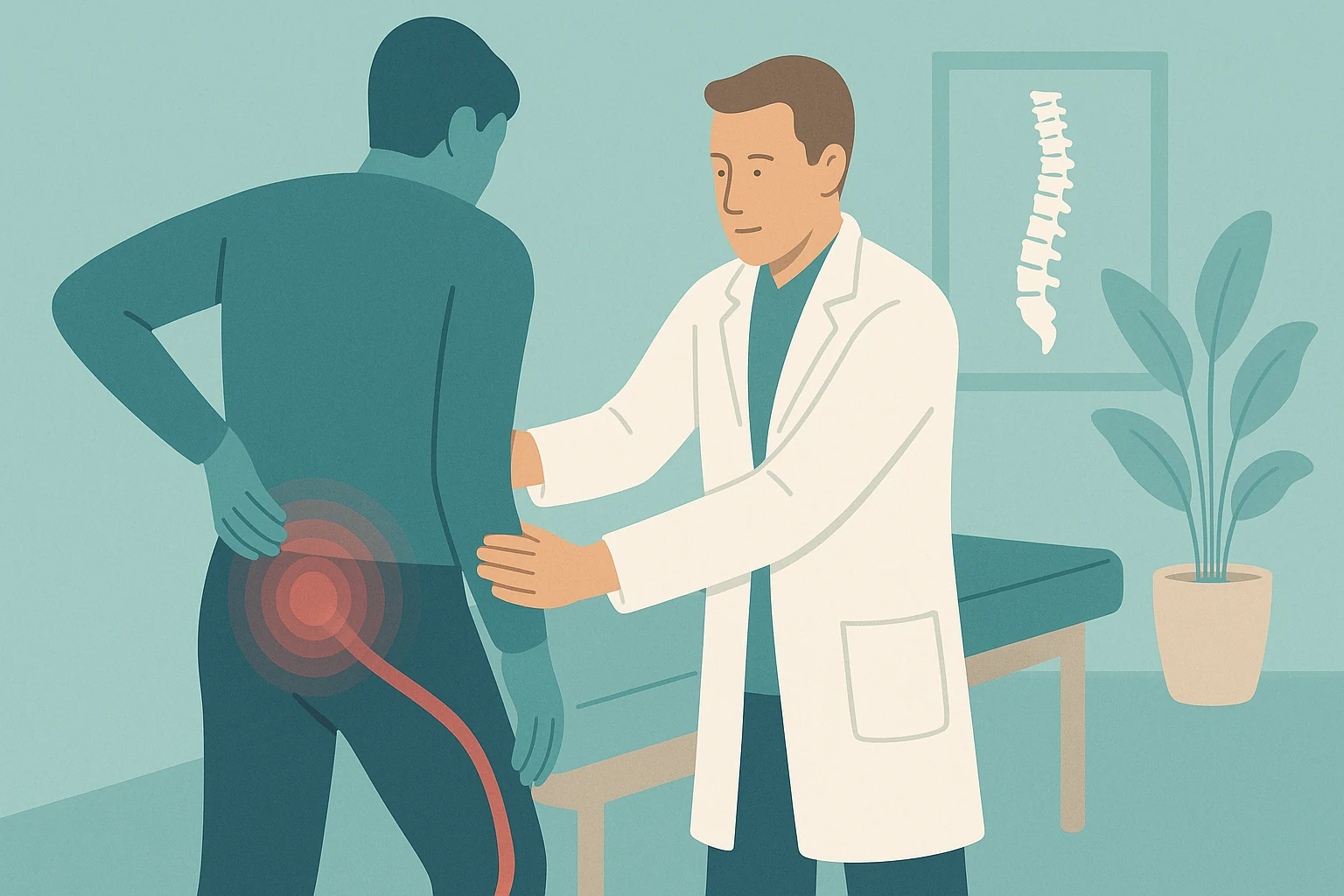
I'm Dr. Ivan Bracic, and I've spent more than 30 years treating back and nerve injuries in Illinois and here in Southwest Florida. A pinched nerve in the lower back is one of the most common reasons people walk into our Fort Myers and Lehigh Acres offices, and it's also one of the most misunderstood. This article explains what actually causes it and the warning signs worth paying attention to, so you know when a little rest is fine and when it's time to get looked at.
I want to be clear up front. This is educational, not a diagnosis. A pinched nerve can have several different causes, and a few of them are serious. My goal here is to help you recognize what's happening and understand why getting evaluated matters, not to talk you out of seeing someone.
What a pinched nerve in the lower back actually is
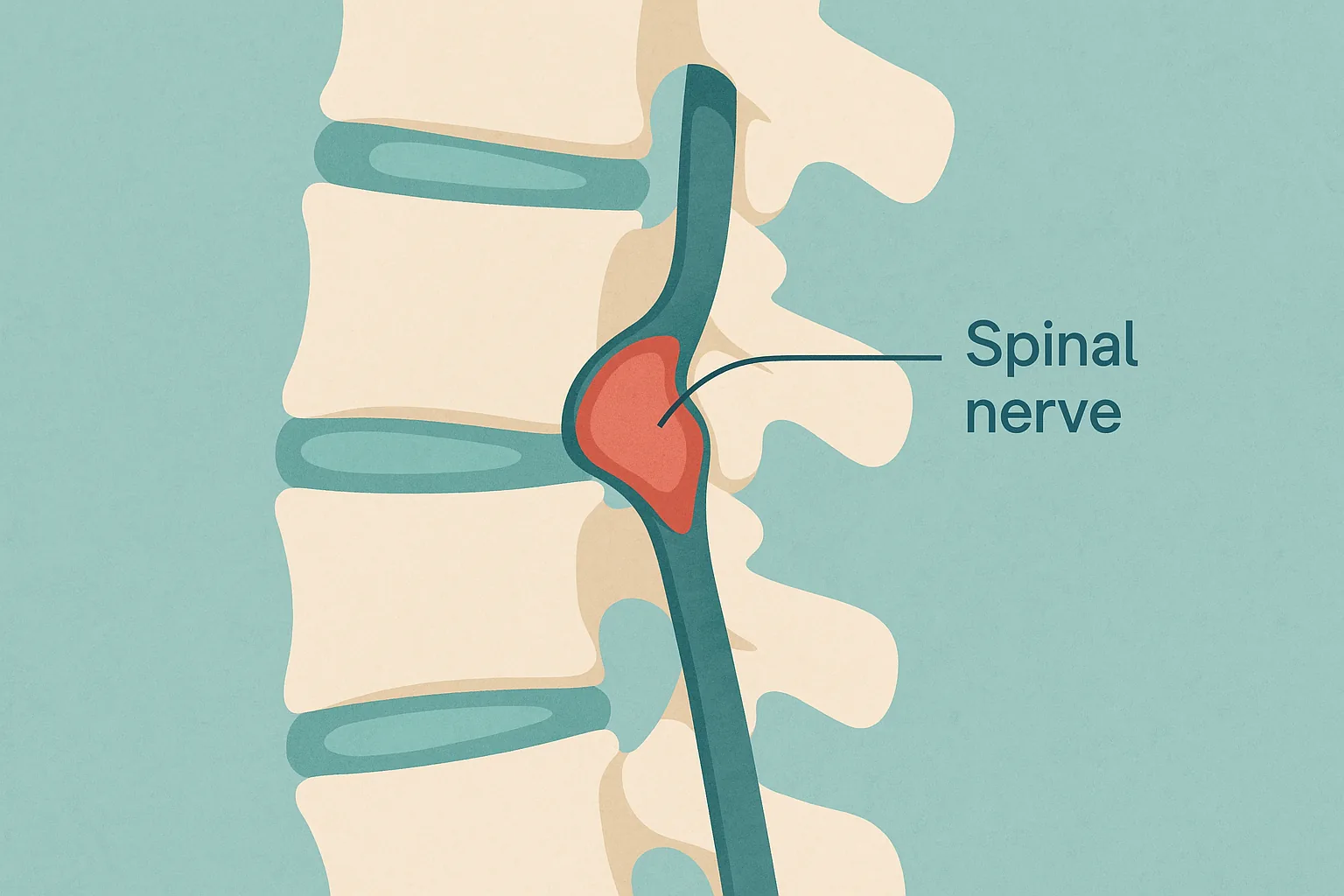
A pinched nerve in the lower back is a spinal nerve that's being compressed or irritated where it exits the spine. Doctors often call it lumbar radiculopathy. The pressure inflames the nerve, and that irritation is what you feel.
Here's the part people find surprising. The pain often isn't worst where the nerve is pinched. Nerves in your lower back travel down into your buttock, thigh, leg, and foot, so a nerve compressed at your spine can send pain, numbness, or tingling all the way to your toes. That's why a back problem can feel like a leg problem.
When the compressed nerve is one that forms the sciatic nerve, the leg pain has a name most people know: sciatica. Same mechanism, familiar symptom.
What causes a pinched nerve in the lower back
Most lower-back pinched nerves come from one of a handful of causes, and they narrow the space a nerve needs. Knowing the usual suspects helps, but only an evaluation can tell you which one is yours.
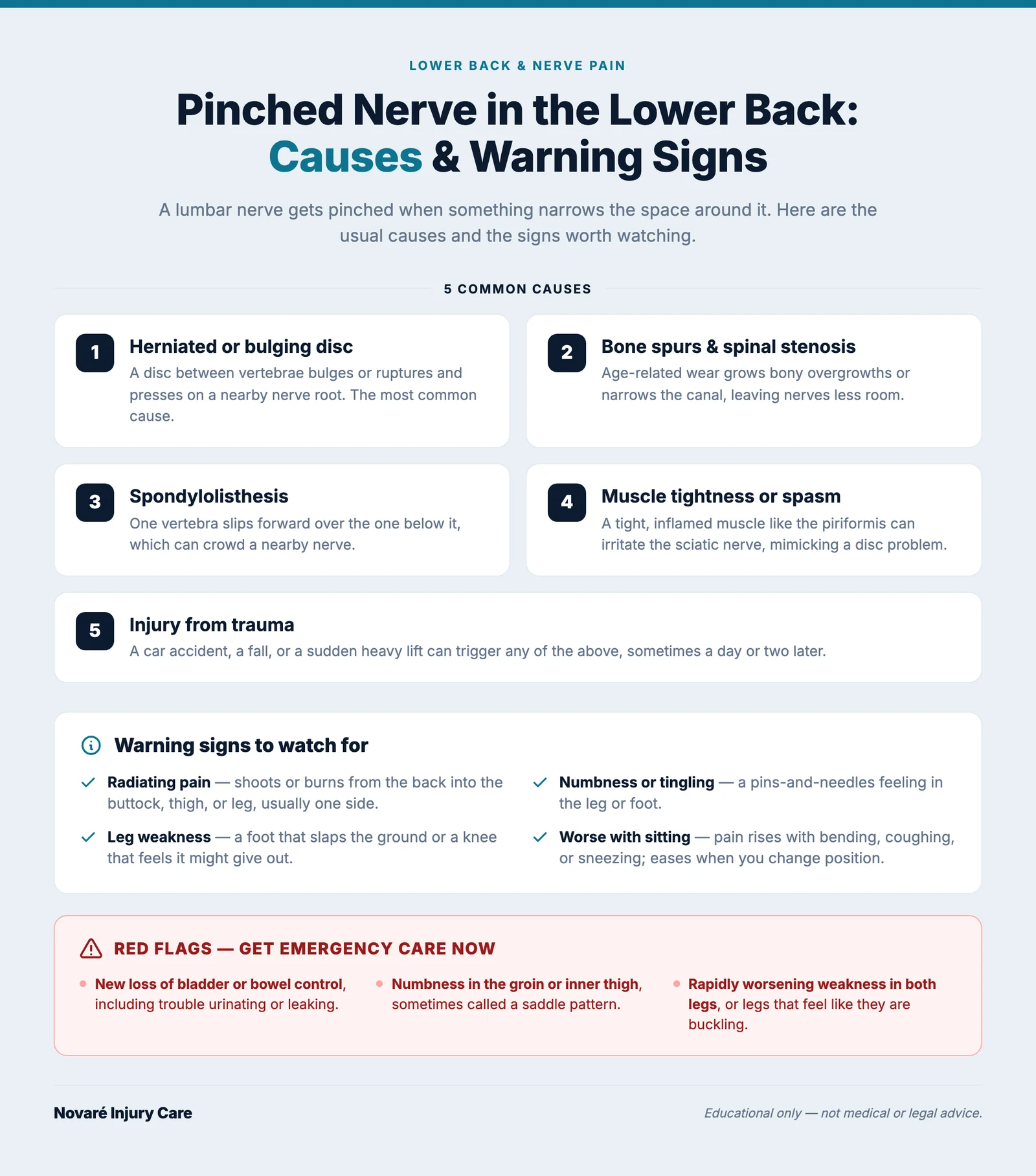
- Herniated or bulging disc. The cushioning disc between two vertebrae bulges or ruptures and presses on a nearby nerve root. This is the most common cause I see, especially after lifting, twisting, or a crash.
- Bone spurs and spinal stenosis. Age-related wear can grow bony overgrowths or narrow the spinal canal, leaving less room for the nerves. More common as we get older.
- Spondylolisthesis. One vertebra slips forward over the one below it, which can crowd a nerve.
- Muscle tightness or spasm. A tight, inflamed muscle like the piriformis in the buttock can irritate the sciatic nerve, mimicking a disc problem.
- Injury from trauma. A car accident, a fall, or a sudden heavy lift can trigger any of the above, sometimes right away and sometimes a day or two later.
The American Association of Neurological Surgeons notes that a herniated lumbar disc is a leading cause of nerve-root pain in the lower back, which lines up with what walks through our door. You can read their overview of herniated discs for the anatomy in more depth.
Why accidents and daily habits set it off
In Southwest Florida, two patterns account for a lot of what I treat. The first is trauma. A rear-end collision on I-75 or Daniels Parkway loads the spine suddenly, and a disc that was quietly worn can herniate and press on a nerve.
The second is slower. Years of sitting, poor lifting mechanics, and gradual disc wear thin out that cushion until a nerve finally gets crowded. Sometimes a minor movement is just the last straw on top of a long buildup.
If your pinched nerve started after a crash, get evaluated quickly. In Florida, prompt care also matters for your coverage. Our same-day auto accident care team documents crash-related injuries within the state's 14-day PIP window.
The warning signs of a pinched nerve
The classic sign of a pinched nerve in the lower back is pain that radiates. It doesn't stay put. Instead of aching only in your back, it shoots, burns, or feels electric as it travels into your buttock, down the back or side of your thigh, and sometimes past the knee into the calf or foot. Usually it's one side.
Alongside that radiating pain, watch for these:
- Numbness or tingling in the leg or foot, often a pins-and-needles feeling.
- Weakness in the leg, like your foot slapping the ground or a knee that feels like it might give out.
- Pain that worsens with sitting, bending forward, coughing, or sneezing, because those raise pressure around the nerve.
- Relief when you change position, such as standing up or lying down, which points toward a nerve, not a muscle.
One useful distinction. A pulled muscle tends to feel sore, tight, and local to the back, and it eases with rest. Nerve pain tends to travel down the leg and comes with numbness, tingling, or weakness. If your pain is heading down your leg, treat that as a signal to get evaluated rather than to wait.
Red flags: when to get emergency care now
Most pinched nerves are painful but not dangerous. A small number are. These symptoms are not "wait and see" problems, and if you have them, get emergency care right away rather than booking a routine visit.
- New loss of bladder or bowel control, including trouble urinating or leaking without warning.
- Numbness in the groin or inner-thigh area, sometimes called a saddle pattern.
- Rapidly worsening weakness in both legs, or legs that feel like they're buckling.
Together these can signal cauda equina syndrome, a rare compression of the nerve bundle at the base of the spine. The National Institute of Arthritis and Musculoskeletal and Skin Diseases lists trouble urinating and weakness or numbness in the legs among the signs that back pain needs a doctor rather than watchful waiting. This is a medical emergency because delayed treatment can lead to permanent damage.
A few other situations warrant a prompt call, not necessarily the ER: severe pain right after major trauma, back pain with a fever, or pain paired with unexplained weight loss. When you're unsure, err toward getting seen.
Why getting evaluated matters
Here's the honest reason evaluation matters. All those causes I listed can produce the same leg pain, but they don't respond to the same care. You can't tell a herniated disc from spinal stenosis or a tight piriformis by how it feels, and treating the wrong one wastes time while the nerve stays compressed.
A proper evaluation sorts that out. We do a hands-on exam to test strength, reflexes, and where the pain travels, and when it's warranted we use in-house diagnostic imaging to see what's pressing on the nerve. Only then does it make sense to talk about treatment.
That's also why I've kept this article to causes and warning signs. Once you know what you're dealing with, the next question is what actually helps, and I cover the relief options in a separate guide on how to relieve a pinched nerve. For disc-related nerve compression specifically, non-surgical spinal decompression is often part of the picture, but the right plan depends on your diagnosis.
The questions we hear most from patients with lower-back nerve pain, answered in plain language.
Not sure what's causing your leg pain? Get it checked
You don't have to guess whether that pain running down your leg is serious. If it radiates, comes with numbness or weakness, or has lasted more than a week, get evaluated. Our team at Novaré Injury Care and Rehab offers same-day and next-day appointments in Fort Myers and Lehigh Acres, with in-house imaging to find what's actually pressing on the nerve. Call our Fort Myers office at (239) 893-2225 to get seen.
This article was reviewed by Dr. Ivan Bracic, DC, founder and clinical director of Novaré Injury Care and Rehab in Fort Myers and Lehigh Acres, Florida. Trauma Team certified and a Certified Independent Chiropractic Examiner, Dr. Bracic has spent more than 30 years diagnosing and treating disc and nerve injuries, including the lower-back nerve compression this article describes.
Frequently asked questions
What does a pinched nerve in the lower back feel like?
It usually feels like a sharp, burning, or electric pain that starts in the lower back and travels into the buttock, thigh, or down the leg, often on one side. Many people also notice numbness, tingling, or a pins-and-needles feeling in the leg or foot, and sometimes weakness. The pain frequently gets worse with sitting, bending, coughing, or sneezing. When the pain follows the sciatic nerve path down the leg, it is commonly called sciatica.
What causes a pinched nerve in the lower back?
A lumbar nerve gets compressed when something narrows the space around it. The most common causes are a herniated or bulging disc pressing on a nerve root, bone spurs or spinal stenosis from age-related wear, spondylolisthesis where one vertebra slips forward, and tight or inflamed muscles like the piriformis. A car accident, a fall, or lifting injury can trigger any of these. Getting evaluated is the only way to know which one is causing your pain.
When is a pinched nerve in the lower back an emergency?
Seek emergency care right away if you have new loss of bladder or bowel control, numbness in the groin or inner-thigh area (a saddle pattern), or rapidly worsening weakness in both legs. These can signal cauda equina syndrome, a rare but serious condition that needs urgent treatment to prevent permanent damage. Sudden severe pain after major trauma, or pain with fever and unexplained weight loss, also warrants prompt medical attention.
How long does a pinched nerve in the lower back last?
Many pinched nerves settle down over several weeks with appropriate care, because the underlying irritation and swelling around the nerve can decrease over time. Recovery varies with the cause, your overall health, and how early you get evaluated. Pain that persists beyond a few weeks, keeps returning, or comes with weakness or numbness should be checked so the cause can be identified rather than managed blindly. We do not promise timelines, because every case is different.
Should I see a doctor for a pinched nerve or wait it out?
See a provider if the pain radiates down your leg, lasts more than a week or two, keeps coming back, or comes with numbness or weakness. Waiting it out is reasonable only for mild, brief back stiffness with no leg symptoms and no red flags. An evaluation identifies the actual cause, rules out anything serious, and lets you start care before a nerve stays compressed. After a car accident in Florida, prompt evaluation also protects your PIP benefits.